

Stablecoin supply just fell by more dollars in a month than at any time outside the Terra collapse, which saw about $28.6 billion removed from the stablecoin supply in the month in which TerraUSD lost its peg.
Total supply fell $17.2 billion or about 5.7% in the month to Nov. 24, according to DefiLlama data.
Traders typically see stablecoin supply as dry powder. The general sentiment is that a growing pile means new buyers are bringing dollars into crypto, and a shrinking one means the market has less fuel for the next rally. Glassnode, the onchain analytics firm, wrote on X that "as holders swap stables to fiat they drain buying power" from crypto.
Amid the stablecoin supply drop, bitcoin has also recorded a steep decline. It was most recently trading around $59,500, about 26% below its close a month earlier.
The largest share of the stablecoin drop is holders of Tether's USDT cashing them in at the issuer. USDT fell $7.74 billion, according to DefiLlama data.
Ethereum carried most of it, with stablecoin supply there down $13.9 billion. USDT shrank on Tron too, which rules out a simple move between blockchains.
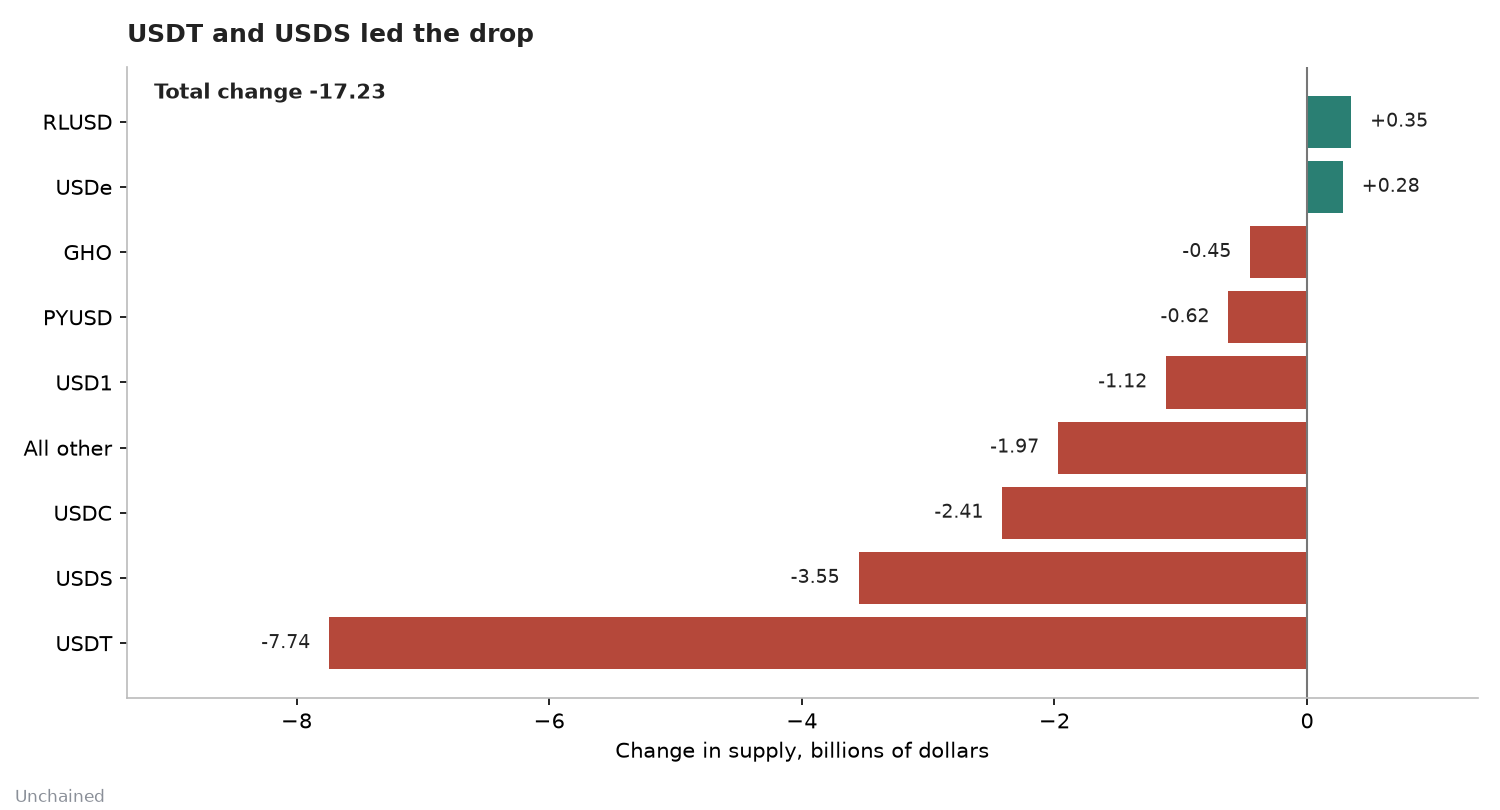
Sky's USDS saw the second largest decline. It fell $3.6 billion over the month, mostly as deposits left Sky's savings product. More than half of that came on Nov. 19, when USDS supply fell about $2 billion in a day, to about $3.2 billion. That was the same day a report traced illicit-linked flows through the facility Sky holders use to swap into USDC.
Circle’s USDC meanwhile recorded a decline of $2.41 billion. World Liberty Financial's USD1 and USDC held on Hyperliquid, the onchain derivatives exchange, each fell about $1 billion.
In the rest of the issue, subscribers get:
-
- A look at some of the factors driving the stablecoin supply drop and why the Binance hack was likely only an accelerant.
- The historical relationship between bitcoin’s price and stablecoin supply.
- What bitcoin’s price action suggests about where we are in the market.
- Illustrative bull, base and bear ranges for bitcoin, and the readings that could change the view before the Fed's December meeting.
Already a subscriber? Keep reading.

Grab the limited-time offer!
Subscribe to read the rest.
Get a 2-week free trial
Renews at $25/month
UpgradeWhy serious investors subscribe:
-
Clear thinking during macro regime changes
-
Fewer trades, better decisions
-
Avoiding one bad allocation often matters more than finding one great trade