
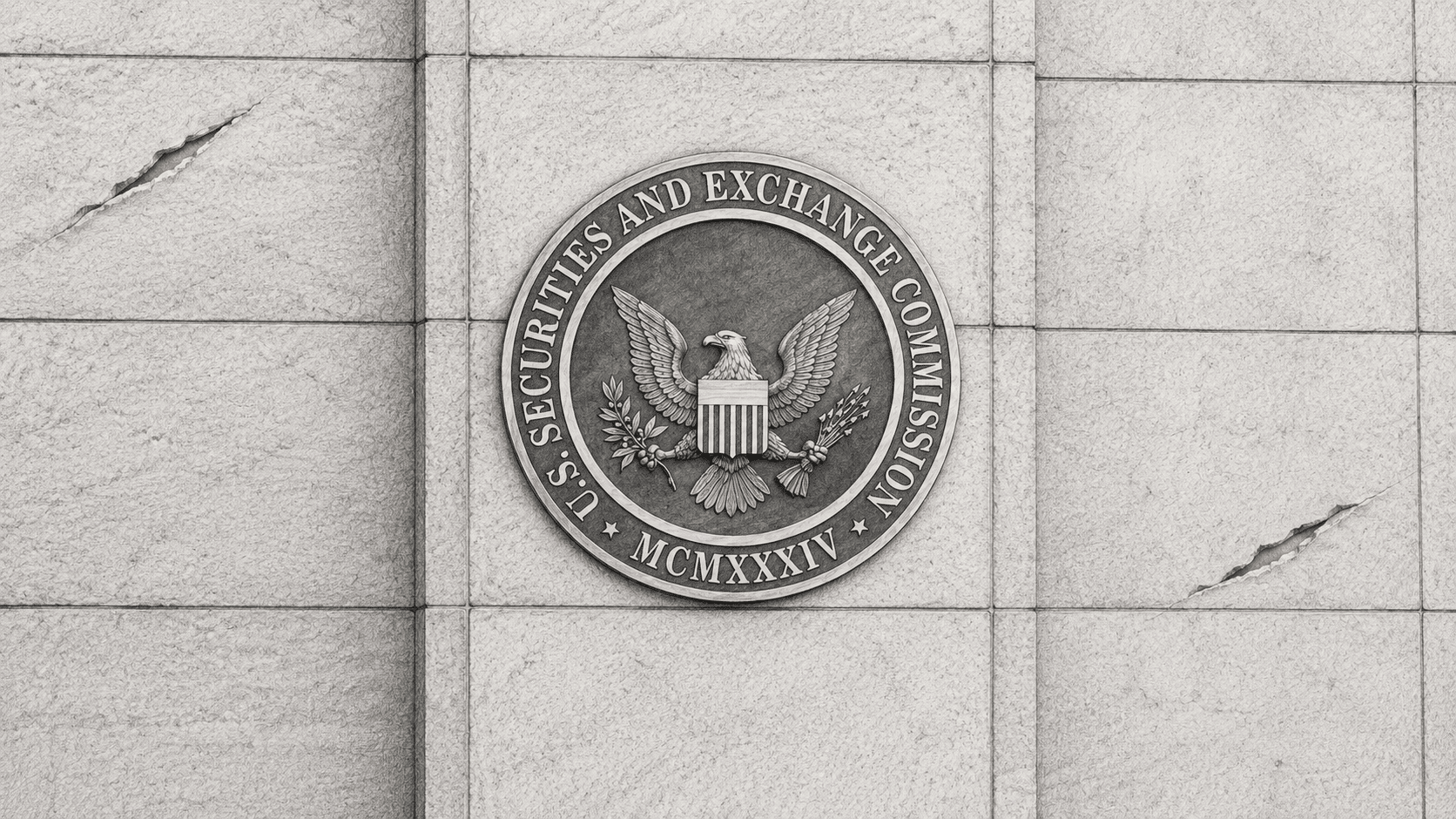

The Securities and Exchange Commission charged two Colorado-incorporated companies on Thursday, alleging they used filings sitting in the agency’s own public databases, plus fake registration certificates stamped with its seal, to convince tens of thousands of retail investors that a crypto trading program had government approval.
In a complaint filed in federal court in Northern California, the agency alleges that BG Wealth Sharing and DSJ Exchange took in more than $130 million from more than 223,000 blockchain addresses between March and mid-June 2026 alone. Spread across those addresses, the deposits average roughly $580 each, an Unchained calculation. The SEC puts investor losses above $100 million and says no more than $25 million went back to wallets likely tied to investors as Ponzi-like payments. That is less than a fifth of the deposits the agency counted.
Get Unchained’s crypto news in your inbox with the free Unchained Daily newsletter.
How the Filings Were Used
BG Wealth filed a Form ADV as an exempt reporting adviser in August 2025, a month after DSJ Exchange filed a Form D announcing a purported $100 million offering, the complaint says. Investors were then told by BG Wealth and its promoters to look up those filings on the agency’s adviser search site and on EDGAR as proof the firms were “registered,” while BG Wealth’s website showed certificates carrying the CRD and CIK numbers tied to those filings.
Neither filing is a license. In the SEC’s account, an exempt reporting adviser’s Form ADV and a Form D notice show nothing about whether the agency approved a filer, and the SEC issues no registration certificates at all. The complaint also says the filings were false: BG Wealth named an auditor, Indicator Global, that appears in no public registry of accounting firms, and listed a virtual mailbox as its main office.
Blocked Withdrawals
After the FBI seized BG Wealth’s original domain on April 23, Stephen Beard, BG Wealth’s purported founder, blamed a Chinese hacker, the SEC says. DSJ Exchange later shut off withdrawals, and investors were told to pay a “tax” to unlock their accounts and to deposit more to move to a new platform, HQIEX. Those who paid still couldn’t withdraw.
On Sept. 29, DSJ Exchange renamed itself Horizon Crest Capital on EDGAR and filed a new Form D, according to the complaint. At least seven foreign regulators and seven U.S. states have issued warnings or orders against the scheme.
The SEC charged both companies with violating federal antifraud rules, and BG Wealth with violating the Investment Advisers Act. It seeks injunctions, disgorgement, civil penalties and an order barring BG Wealth from filing further Forms ADV as an exempt reporting adviser.
Related Listen: Why SBF’s Fraud Was About Delusions, Not Effective Altruism