
Quick favor: We’re deciding what Unchained does next; new shows, stream times, what’s worth paying for.
Our listener survey takes five minutes, it’s anonymous, and I read the write-in answers myself. Everyone who finishes it gets a free month of Premium, Unchained or Bits + Bips, your pick. Open through Sunday, November 8.
— Laura
Listen to the episode on YouTube, Apple Podcasts, Spotify, Fountain, Podcast Addict, Pocket Casts, Amazon Music, or on your favorite podcast platform.
Thank you to our sponsor!
Put your crypto to work with Nexo: earn daily interest or borrow funds against your assets on one platform trusted by more than 10 million clients.
Find out more at Nexo.
Geo-restrictions, eligibility and terms apply.
👉 With Election Day on November 3, crypto voters could make the difference in close races. Check where candidates stand on crypto, verify your registration, and make your voting plan at Stand With Crypto’s Voter Hub.
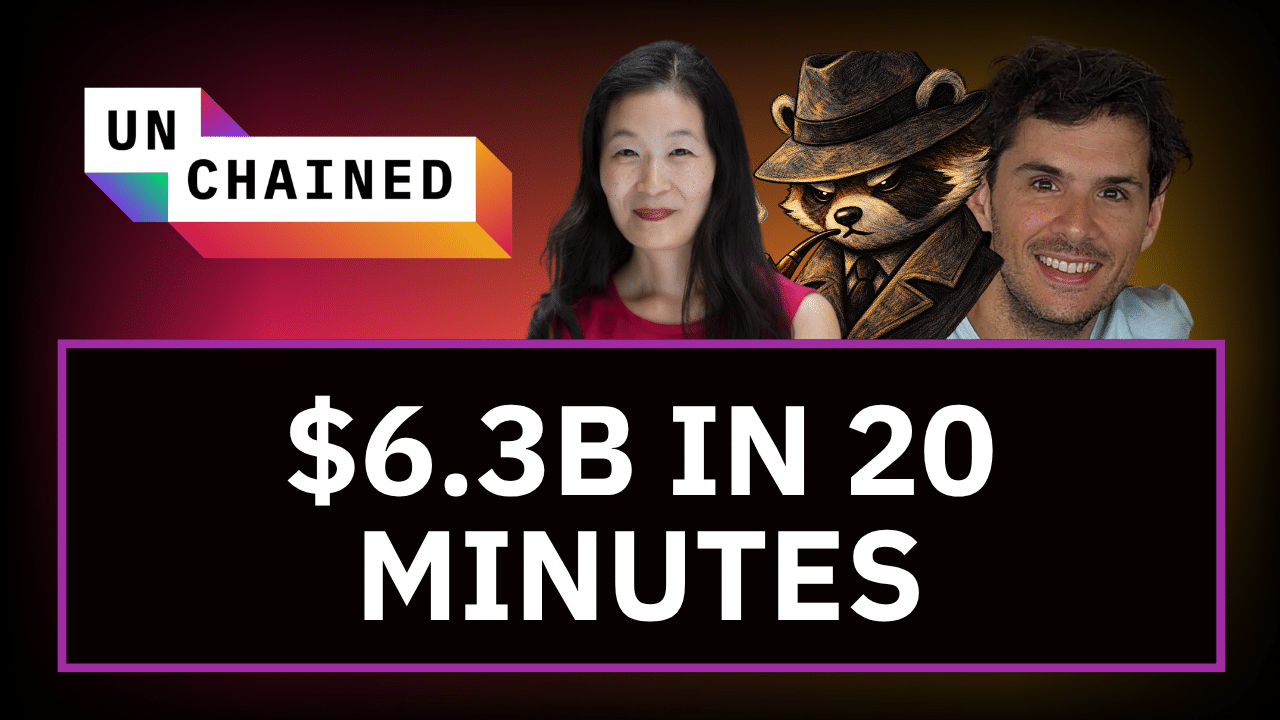
North Korea only needed 20 minutes to take $6.3 billion from Binance in the largest hack in history, not just crypto history. According to Binance, one of the attack vectors started with a compromised developer laptop, which ultimately led to the attackers being able to sign transactions from the exchange’s hot wallets.
Jonty, founder of Pangolin Intelligence, and Pablo Sabbatella, founder of Opsek, trace how an EIP-7702 upgrade let the hackers sweep those wallets, why roughly 43% of the funds were frozen compared with less than 3% after Bybit, and how Circle, Tether, Arbitrum’s Security Council and Aave responded. They also debate how decentralized THORChain really is, why the FBI named THOR node operators, and how TraderTraitor lures developers with fake job interviews.
With Chainalysis tying nearly 89% of this year’s reported hack losses to North Korea, Pablo and Jonty lay out the security and anti-laundering steps the industry could take before the next attack.
Host:
-
- Laura Shin – Founder, CEO and Host of Unchained
Guests:
-
- Jonty (tanuki42) – Founder of Pangolin Intelligence
- Pablo Sabbatella – Founder of Opsek