
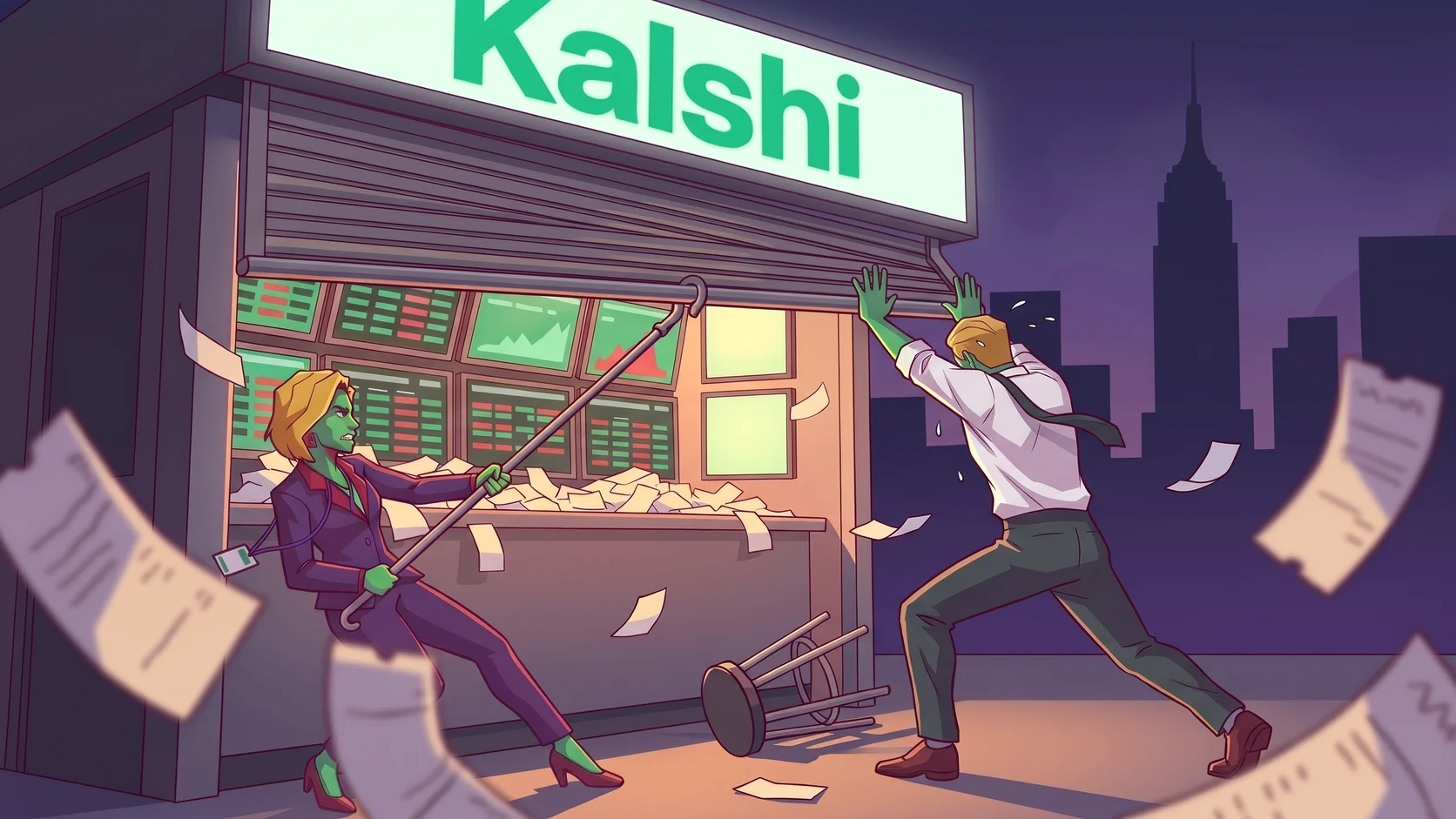

Prediction market Kalshi has paused operations in Utah, spokesperson Jacki McGavick told The Salt Lake Tribune on Monday. Starting Monday, Kalshi’s more than 177,000 Utah users are blocked from new trades and limited to closing out what they hold and pulling their money, she said.
The same day in New York, a state judge said she would deny the New York attorney general’s request for a temporary restraining order (TRO) against Kalshi, according to a live account of the hearing posted on X by attorney Daniel Wallach.
Both fights play out as federal appeals courts disagree over whether states can police Kalshi’s contracts, a split that Bits + Bips host Austin Campbell said on Unchained’s Bits + Bips in August is “catnip for the Supreme Court,” because “to say the exact same federal law means this here but something different over here is the exact thing they are meant to guard against.”
Get Unchained’s crypto news in your inbox with the free Unchained Daily newsletter.
Why Kalshi Stepped Back in Utah
McGavick reportedly tied the pause to an earlier federal ruling and to a case still pending. On Aug. 4, U.S. District Judge Robert J. Shelby ruled against Kalshi on the Commodity Exchange Act (CEA), the federal law that governs derivatives, writing that “the CEA does not preempt Utah’s enforcement of its anti-gambling laws against Kalshi.”
The pending case is the lawsuit against Utah from the Commodity Futures Trading Commission (CFTC), the federal derivatives regulator, which contends that federal law leaves prediction markets to it alone, not to the states. Shelby has yet to rule in that case and gave no timeline. At a Nov. 20 hearing, he said “regulation of gambling sits squarely within the police powers of the state” and warned the CFTC faced “a steep hill to climb” in changing his mind, FOX 13 reported. The CFTC’s emergency request to block Utah’s enforcement had not been granted, the spokesperson told Reuters.
Meanwhile, Utah is also pursuing Kalshi in criminal court. The state’s charging document, dated Oct. 28, lists 14 counts, 13 of them felonies, built on 12 sports wagers that a special agent in Attorney General Derek Brown’s office placed from Utah in September. Each count is written against the company, with co-founders Tarek Mansour, the CEO, and Luana Lopes Lara, the chief operating officer, named as co-defendants.
“This is an unfortunate outcome for the more than 177,000 Utahns who use Kalshi,” McGavick reportedly said, adding that the company will “continue to fight this in court.”
New York Heads to a January Hearing
In New York, where Kalshi and the state have clashed over how far a gambling order could reach, Justice Melissa Crane said the AG’s requested TRO would not preserve the status quo, which “has been going on for over a year,” Wallach reported on X. He wrote that she would deny it to move straight to an expedited hearing on a preliminary injunction, not on the merits.
The denial was not yet formal. Crane said she may lack authority to enter the order until the attorney general’s office delivers a certified copy of the federal order that sent the case back to state court, Wallach reported. Unchained did not find a signed order.
Kalshi proposed briefing deadlines of Dec. 4 and Dec. 11, and Crane offered Jan. 7 or 8 for in-person argument, according to Wallach. She also asked both sides to work out safeguards for 18-to-20-year-olds, since New York’s minimum age for sports betting is 21. The attorney general’s office said it would need to consider internally whether to appeal, Wallach wrote.
Kalshi did not immediately respond to a request for comment from Unchained.
Related Listen: CME vs. Kalshi. Is Washington Picking a Winner in Prediction Markets?